

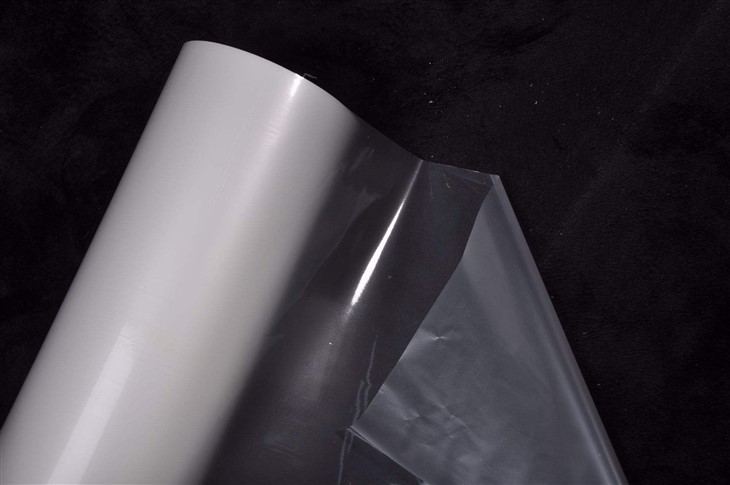
As a supplier of PU Transparent FILM, I often encounter inquiries about the light transmittance of our product. Light transmittance is a crucial property that determines the clarity and visibility through the film, making it a key consideration for various applications. In this blog post, I will delve into the concept of light transmittance, its significance in the context of PU Transparent FILM, and how it affects different industries.

Understanding Light Transmittance
Light transmittance refers to the percentage of incident light that passes through a material. It is a measure of how clear or transparent a material is. In the case of PU Transparent FILM, a high light transmittance indicates that a large portion of light can pass through the film without significant absorption or scattering. This results in excellent visibility and clarity, making the film suitable for applications where transparency is essential.
The light transmittance of a material is influenced by several factors, including its chemical composition, thickness, and surface properties. For PU Transparent FILM, the type of polyurethane used, the presence of additives, and the manufacturing process can all affect its light transmittance. Additionally, the thickness of the film plays a significant role, as thicker films generally have lower light transmittance due to increased absorption and scattering of light.
Significance of Light Transmittance in PU Transparent FILM
The light transmittance of PU Transparent FILM is of utmost importance in a wide range of applications. Here are some key industries where high light transmittance is crucial:
Packaging Industry
In the packaging industry, PU Transparent FILM is commonly used for wrapping products, providing a clear view of the contents. High light transmittance ensures that the product inside the packaging is visible, enhancing its appeal to consumers. This is particularly important for food products, where transparency allows customers to inspect the quality and freshness of the food.
Display and Signage
PU Transparent FILM is also widely used in display and signage applications. Whether it's for retail displays, trade show booths, or outdoor signage, high light transmittance is essential for clear and vibrant visuals. The film can be printed with high-resolution graphics and images, and its transparency allows the content to be easily seen from a distance.
Automotive Industry
In the automotive industry, PU Transparent FILM is used for various applications, such as window tinting, headlight covers, and interior trim. High light transmittance is crucial for window tinting to ensure good visibility while driving. For headlight covers, the film's transparency helps to maintain the brightness and clarity of the headlights.
Electronics Industry
In the electronics industry, PU Transparent FILM is used for touchscreens, display panels, and protective covers. High light transmittance is essential for touchscreens to ensure accurate touch response and clear visibility of the display. For display panels, the film's transparency helps to enhance the image quality and color accuracy.
Measuring Light Transmittance
The light transmittance of PU Transparent FILM is typically measured using a spectrophotometer. A spectrophotometer measures the amount of light that passes through a sample at different wavelengths. The results are then used to calculate the light transmittance percentage.
When measuring the light transmittance of PU Transparent FILM, it is important to consider the wavelength range of interest. Different applications may require different levels of light transmittance at specific wavelengths. For example, in the visible light range (400-700 nm), high light transmittance is generally desired for clear visibility. However, in some applications, such as UV protection, a low light transmittance in the UV range (200-400 nm) may be required.
Factors Affecting Light Transmittance in PU Transparent FILM
As mentioned earlier, several factors can affect the light transmittance of PU Transparent FILM. Here are some of the key factors:
Chemical Composition
The chemical composition of the polyurethane used in the film can have a significant impact on its light transmittance. Different types of polyurethane have different optical properties, and the presence of additives can also affect the transparency of the film. For example, some additives may absorb or scatter light, reducing the light transmittance.
Thickness
The thickness of the film is another important factor that affects light transmittance. Thicker films generally have lower light transmittance due to increased absorption and scattering of light. However, the relationship between thickness and light transmittance is not linear, and other factors such as the chemical composition and surface properties of the film also play a role.
Surface Properties
The surface properties of the film, such as its smoothness and roughness, can also affect its light transmittance. A smooth surface allows light to pass through more easily, resulting in higher light transmittance. On the other hand, a rough surface can scatter light, reducing the light transmittance.
Manufacturing Process
The manufacturing process used to produce the PU Transparent FILM can also affect its light transmittance. Factors such as the extrusion temperature, pressure, and cooling rate can all influence the optical properties of the film. A well-controlled manufacturing process can help to ensure consistent and high light transmittance.
Our PU Transparent FILM and Light Transmittance
At our company, we are committed to providing high-quality PU Transparent FILM with excellent light transmittance. Our PU Transparent FILM is made from premium-grade polyurethane and is carefully manufactured to ensure consistent and high light transmittance.
We offer a range of thicknesses to meet the specific requirements of different applications. Our films are available in thicknesses ranging from 0.02 mm to 0.5 mm, and we can also customize the thickness according to your needs.
In addition to high light transmittance, our PU Transparent FILM also offers other excellent properties, such as high tensile strength, good abrasion resistance, and excellent chemical resistance. These properties make our film suitable for a wide range of applications in various industries.
Conclusion
Light transmittance is a crucial property of PU Transparent FILM that determines its clarity and visibility. It is of utmost importance in a wide range of applications, including packaging, display and signage, automotive, and electronics. At our company, we are dedicated to providing high-quality PU Transparent FILM with excellent light transmittance. Our films are carefully manufactured to ensure consistent and high performance, and we offer a range of thicknesses to meet the specific requirements of different applications.
If you are interested in learning more about our PU Transparent FILM or have any questions about light transmittance, please feel free to contact us. We would be happy to discuss your needs and provide you with the best solutions.
References
- ASTM D1003 - Standard Test Method for Haze and Luminous Transmittance of Transparent Plastics
- ISO 13468 - Plastics - Determination of the total luminous transmittance of transparent materials