

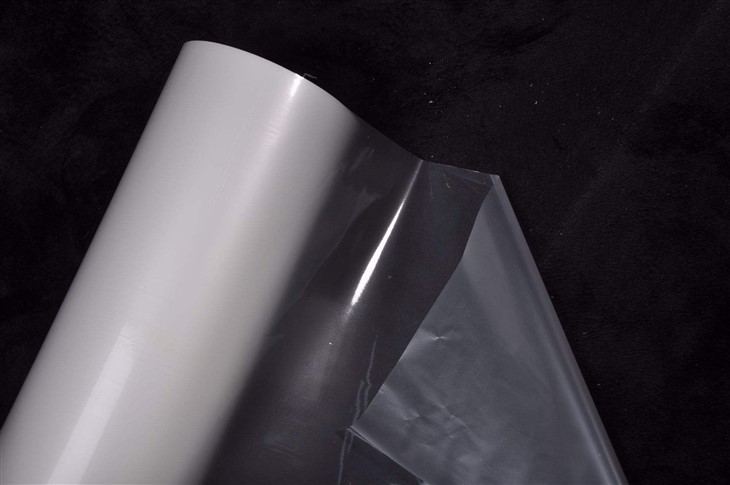
As a supplier of PU Nylon Film, I often get asked about the optical clarity of this remarkable material. Optical clarity is a crucial property, especially for applications where visual transparency and high - quality visual perception are required. In this blog, I'll delve into what the optical clarity of PU Nylon Film means, its influencing factors, and its significance in various industries.
What is Optical Clarity?
Optical clarity refers to the degree to which a material allows light to pass through without significant scattering or absorption. A material with high optical clarity appears transparent, enabling clear visualization of objects behind it. For PU Nylon Film, optical clarity is measured by parameters such as haze and light transmittance.
Haze is defined as the percentage of transmitted light that deviates from the incident light by more than 2.5° on average. A lower haze value indicates less light scattering and a clearer appearance. Light transmittance, on the other hand, is the ratio of the amount of light transmitted through the film to the amount of incident light. A high light - transmittance value means that more light can pass through the film, resulting in better transparency.
Factors Affecting the Optical Clarity of PU Nylon Film
Material Composition
The chemical composition of PU Nylon Film plays a fundamental role in determining its optical clarity. The polyurethane (PU) component provides flexibility, durability, and good adhesion properties, while nylon imparts strength and abrasion resistance. The molecular structure and compatibility between the PU and nylon phases are crucial. If the two polymers are not well - blended at the molecular level, it can lead to phase separation, which in turn causes light scattering and reduces optical clarity.
Manufacturing Process
The manufacturing process of PU Nylon Film also has a significant impact on its optical properties. Extrusion is a common method for producing the film. During extrusion, factors such as temperature, pressure, and extrusion speed need to be carefully controlled. If the temperature is too high or too low, it can affect the molecular orientation and crystallization of the polymers, leading to changes in optical clarity. For example, excessive crystallization can cause light scattering at the crystal boundaries, resulting in a hazy appearance.
Surface Finish
The surface finish of the film can influence its optical clarity. A smooth surface allows light to pass through more uniformly, while a rough or textured surface can scatter light. During the manufacturing process, the rollers used to form the film need to be in excellent condition to ensure a smooth surface. Any scratches or irregularities on the rollers can be transferred to the film surface, reducing its optical clarity.
Significance of Optical Clarity in Different Industries
Packaging Industry
In the packaging industry, optical clarity is highly valued. Consumers often prefer to see the product inside the package before making a purchase. PU Nylon Film with high optical clarity can provide a clear view of the packaged goods, enhancing the product's visual appeal. For example, in the food packaging sector, clear PU Nylon Film can showcase the freshness and quality of the food products, attracting more customers. You can explore our [PU Transparent FILM](/film/pu - film/pu - transparent - film.html) which is widely used in various packaging applications.
Electronics Industry
In the electronics industry, PU Nylon Film is used in applications such as display screens and touch panels. High optical clarity is essential to ensure clear image display and accurate touch - screen operation. The film needs to have low haze and high light transmittance to provide a sharp and vivid visual experience. Our [Pu - Nylon - Film](/film/pu - film/pu - nylon - film.html) meets the strict optical requirements of the electronics industry, making it an ideal choice for these applications.
Medical Industry
In the medical field, PU Nylon Film is used for applications like wound dressings and medical device packaging. Optical clarity is important for medical professionals to visually inspect the wound or the medical device inside the packaging. A clear film allows for easy monitoring of the wound's healing process or the integrity of the medical device, ensuring proper treatment and patient safety.
Measuring the Optical Clarity of PU Nylon Film
To accurately measure the optical clarity of PU Nylon Film, specialized instruments are used. A haze meter is commonly employed to measure the haze value of the film. The instrument illuminates the film sample with a collimated light beam and measures the amount of light scattered at angles greater than 2.5°. Light transmittance can be measured using a spectrophotometer, which measures the intensity of light before and after passing through the film.
Improving the Optical Clarity of PU Nylon Film
Additives
Additives can be used to improve the optical clarity of PU Nylon Film. Anti - block agents can prevent the film from sticking together during storage and handling, which can help maintain a smooth surface and improve clarity. UV stabilizers can also be added to protect the film from UV - induced degradation, which can cause yellowing and reduce clarity over time.
Process Optimization
Optimizing the manufacturing process is another effective way to improve optical clarity. By carefully controlling the extrusion temperature, pressure, and speed, the molecular structure of the film can be better regulated, reducing light scattering. Additionally, using high - quality raw materials and maintaining clean production environments can also contribute to better optical properties.
Conclusion
The optical clarity of PU Nylon Film is a critical property that affects its performance in various industries. Understanding the factors that influence optical clarity, such as material composition, manufacturing process, and surface finish, is essential for producing high - quality films. As a supplier of PU Nylon Film, we are committed to providing products with excellent optical clarity to meet the diverse needs of our customers.

If you are interested in our PU Nylon Film products and want to learn more about their optical clarity or other properties, we welcome you to contact us for procurement and further discussions. Our team of experts is ready to assist you in finding the most suitable solutions for your specific applications.
References
- ASTM D1003 - Standard Test Method for Haze and Luminous Transmittance of Transparent Plastics
- ISO 13468 - Plastics - Determination of the total luminous transmittance of transparent materials