

As a supplier of PVC coated raincoat fabric, I often encounter various inquiries from customers. One question that has been coming up more frequently lately is about the resistance of PVC coated raincoat fabric to ozone. In this blog post, I will delve into this topic, sharing scientific insights and practical knowledge based on my experience in the industry.
Understanding Ozone and Its Impact on Fabrics
Ozone (O₃) is a highly reactive gas that exists in the Earth's atmosphere, both in the stratosphere and at ground - level. In the stratosphere, it plays a crucial role in protecting the Earth from harmful ultraviolet radiation. However, at ground - level, ozone is considered a pollutant and can have detrimental effects on various materials, including fabrics.
Ozone reacts with organic compounds through a process called ozonolysis. This reaction can break down chemical bonds in polymers, leading to changes in the physical and mechanical properties of the material. For fabrics, this can result in discoloration, loss of strength, and a reduction in flexibility.
PVC Coated Raincoat Fabric: Composition and Structure
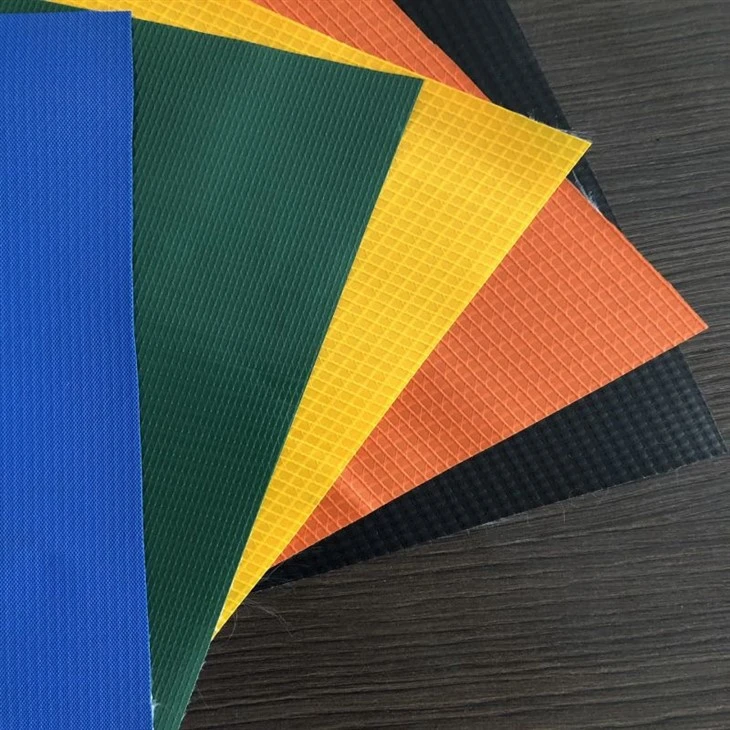
PVC (Polyvinyl Chloride) coated raincoat fabric is a composite material consisting of a base fabric and a PVC coating. The base fabric can be made from various fibers such as polyester, nylon, or cotton, which provide the fabric with strength and flexibility. The PVC coating, on the other hand, is responsible for the waterproof and weather - resistant properties of the raincoat.
The PVC coating is typically applied to the base fabric through a process called lamination. During lamination, a layer of PVC is bonded to the surface of the base fabric using heat and pressure. This creates a continuous and impermeable barrier that prevents water from penetrating the fabric.
Resistance of PVC Coated Raincoat Fabric to Ozone
The resistance of PVC coated raincoat fabric to ozone depends on several factors, including the quality of the PVC coating, the type of base fabric, and the presence of additives.
Quality of the PVC Coating
High - quality PVC coatings are formulated with additives that enhance their resistance to ozone. These additives can act as antioxidants or ozone scavengers, which react with ozone before it can attack the PVC polymer chains. Additionally, the thickness and uniformity of the PVC coating also play a role in ozone resistance. A thicker and more uniform coating provides a better barrier against ozone penetration.

Type of Base Fabric
The base fabric can also influence the ozone resistance of the PVC coated raincoat fabric. Fabrics made from synthetic fibers such as polyester and nylon generally have better ozone resistance compared to natural fibers like cotton. This is because synthetic fibers are more chemically stable and less prone to oxidation by ozone.
Presence of Additives
In addition to the additives in the PVC coating, some manufacturers may add ozone - resistant additives to the base fabric during the manufacturing process. These additives can further enhance the overall ozone resistance of the fabric.
Testing the Ozone Resistance of PVC Coated Raincoat Fabric
To determine the ozone resistance of PVC coated raincoat fabric, various testing methods are available. One of the most commonly used methods is the ozone chamber test. In this test, samples of the fabric are exposed to a controlled atmosphere of ozone at a specified concentration and temperature for a certain period of time. After the exposure, the samples are evaluated for changes in appearance, such as discoloration and cracking, as well as changes in physical properties, such as strength and flexibility.
Another method is the outdoor exposure test. In this test, samples of the fabric are exposed to the natural environment for an extended period of time. This test provides a more realistic assessment of the fabric's ozone resistance under actual conditions. However, it is also more time - consuming and less controlled compared to the ozone chamber test.
Our Products and Their Ozone Resistance
At our company, we offer a range of PVC coated raincoat fabrics, including PVC Laminated Mesh Fabric, PVC Coating Taffeta Fabric, and PVC Coating Jacquard Fabric.
Our PVC coated raincoat fabrics are manufactured using high - quality PVC coatings and base fabrics, and are formulated with ozone - resistant additives. Through rigorous testing, we have ensured that our fabrics have excellent ozone resistance, making them suitable for use in various environments, including areas with high ozone levels.
Importance of Ozone Resistance in Raincoat Fabrics
Ozone resistance is an important property for raincoat fabrics, especially in areas where ozone pollution is a concern. Ozone - damaged raincoats can become brittle, lose their waterproof properties, and develop cracks, which can reduce their effectiveness and lifespan.
For outdoor enthusiasts, such as hikers, campers, and cyclists, raincoats with good ozone resistance are essential. These individuals often spend long periods of time in the outdoors, where they may be exposed to high levels of ozone. A raincoat with poor ozone resistance can quickly deteriorate, leaving them vulnerable to the elements.
Conclusion and Call to Action
In conclusion, the resistance of PVC coated raincoat fabric to ozone is an important factor to consider when choosing a raincoat. Our PVC coated raincoat fabrics are designed to provide excellent ozone resistance, ensuring long - lasting performance and protection.
If you are in the market for high - quality PVC coated raincoat fabric, we invite you to contact us for more information. We are committed to providing our customers with the best products and services, and we look forward to discussing your specific needs and requirements. Whether you are a clothing manufacturer, a retailer, or an individual looking for a reliable raincoat, we have the right fabric for you.
References
- ASTM D1149 - 19 Standard Test Method for Rubber Deterioration - Surface Ozone Cracking in a Chamber.
- ISO 1431 - 1:2012 Rubber, vulcanized or thermoplastic - Resistance to ozone cracking - Part 1: Static strain test.
- "Polyvinyl Chloride (PVC) Handbook" by Charles A. Daniels.