

As a supplier of PU Nylon Film, I've witnessed the increasing demand for films with superior gas barrier performance in various industries, such as food packaging, electronics, and medical applications. A high gas barrier is crucial as it helps to preserve the quality of the contents by preventing the ingress of oxygen, moisture, and other gases. In this blog, I'll share some effective strategies to improve the gas barrier performance of PU Nylon Film based on our experience and industry knowledge.
Understanding the Basics of Gas Barrier in PU Nylon Film
Before diving into the improvement methods, it's essential to understand how gas barrier works in PU Nylon Film. The gas barrier property of a film is mainly determined by its structure and chemical composition. PU Nylon Film has a semi - crystalline structure, and the crystalline regions act as barriers to gas diffusion. However, factors like the degree of crystallinity, orientation of polymer chains, and the presence of additives can significantly affect its gas barrier performance.
Optimizing the Polymer Structure
One of the primary ways to enhance the gas barrier performance is to optimize the polymer structure of the PU Nylon Film.
Controlling the Degree of Crystallinity
The degree of crystallinity can be adjusted during the film - forming process. By carefully controlling the cooling rate, temperature, and stretching conditions, we can increase the proportion of crystalline regions in the film. For example, a slower cooling rate during extrusion allows the polymer chains more time to arrange themselves into an ordered crystalline structure. This increased crystallinity restricts the movement of gas molecules through the film, thus improving the gas barrier.
Chain Orientation
Stretching the PU Nylon Film during production can induce chain orientation. Uniaxial or biaxial stretching aligns the polymer chains in a specific direction, creating a more compact and ordered structure. This oriented structure reduces the free volume between the polymer chains, making it more difficult for gas molecules to penetrate. For instance, biaxial stretching not only improves the gas barrier but also enhances the mechanical properties of the film, such as tensile strength and tear resistance.
Incorporating Barrier Additives
Another effective approach is to incorporate barrier additives into the PU Nylon Film.
Nanoclays
Nanoclays, such as montmorillonite, are widely used as barrier additives. These nanoscale particles have a high aspect ratio, which means they can create a tortuous path for gas molecules. When dispersed uniformly in the polymer matrix, the nanoclays force the gas molecules to take a longer and more complicated route through the film, effectively reducing the gas permeability. The addition of nanoclays can also improve the mechanical and thermal properties of the film.
EVOH (Ethylene - Vinyl Alcohol)
EVOH is a copolymer with excellent gas barrier properties, especially against oxygen. By blending EVOH with PU Nylon in a proper ratio, we can create a composite film with enhanced gas barrier performance. The EVOH phase acts as a barrier layer, preventing the diffusion of oxygen through the film. However, the compatibility between EVOH and PU Nylon needs to be carefully considered to ensure a homogeneous blend and good film - forming properties.
Surface Modification
Surface modification techniques can also play a significant role in improving the gas barrier performance of PU Nylon Film.

Coating
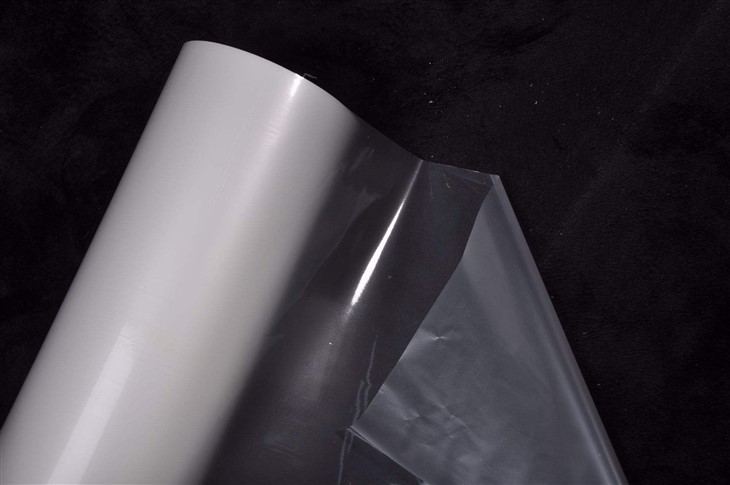
Applying a thin coating on the surface of the PU Nylon Film can create an additional barrier layer. For example, a coating of polyvinylidene chloride (PVDC) or silicon oxide (SiO₂) can significantly reduce the gas permeability. PVDC has excellent oxygen and moisture barrier properties, while SiO₂ coatings are transparent, hard, and provide good oxygen and aroma barrier. The coating can be applied using various methods, such as solvent - based coating, water - based coating, or physical vapor deposition (PVD).
Plasma Treatment
Plasma treatment is a surface modification technique that can change the surface chemistry and morphology of the film. By exposing the PU Nylon Film to a plasma environment, the surface can be activated, and functional groups can be introduced. This can improve the adhesion of subsequent coatings and also create a more compact surface structure, reducing gas permeability. Plasma treatment can be carried out using different gases, such as oxygen, nitrogen, or argon, depending on the desired surface properties.
Multilayer Structure Design
Designing a multilayer structure is an effective way to combine the advantages of different materials and improve the overall gas barrier performance.
Co - extrusion
Co - extrusion is a process of extruding multiple polymer layers simultaneously to form a single film. By combining PU Nylon with other polymers with good gas barrier properties, such as EVOH or PVDC, we can create a multilayer film with enhanced gas barrier. The different layers can be designed to perform different functions, for example, the outer layers can provide mechanical protection, while the inner layers act as gas barriers.
Lamination
Lamination involves bonding two or more films together using an adhesive. This method allows us to combine films with different properties easily. For example, laminating a PU Nylon Film with a metalized film or a film with a high - barrier coating can significantly improve the gas barrier performance. The choice of adhesive is crucial as it should have good adhesion strength and also be compatible with the films being laminated.
Quality Control and Testing
To ensure that the gas barrier performance of the PU Nylon Film meets the required standards, strict quality control and testing are essential.
In - process Monitoring
During the production process, in - process monitoring of parameters such as temperature, pressure, and stretching ratio is necessary. Any deviation from the optimal conditions can affect the gas barrier performance of the film. Real - time monitoring allows for immediate adjustment of the process parameters to maintain consistent quality.
Gas Permeability Testing
After production, the gas permeability of the PU Nylon Film should be tested using standardized methods. Common gas permeability tests include oxygen transmission rate (OTR) and water vapor transmission rate (WVTR) tests. These tests provide quantitative data on the gas barrier performance of the film and help to ensure that it meets the specifications of the end - use application.
Conclusion
Improving the gas barrier performance of PU Nylon Film requires a comprehensive approach that includes optimizing the polymer structure, incorporating barrier additives, surface modification, and multilayer structure design. As a Pu - Nylon - Film supplier, we are committed to providing high - quality films with excellent gas barrier properties. Our PU Transparent FILM is also designed with these techniques to meet the diverse needs of our customers.
If you are interested in our PU Nylon Film products or have any questions about gas barrier improvement, please feel free to contact us for further discussion and potential procurement. We look forward to collaborating with you to find the best film solutions for your specific applications.
References
- Bhunia, A., & Rhim, J. W. (2019). Gas barrier properties of polymer nanocomposites for food packaging: A review. Journal of Industrial and Engineering Chemistry, 76, 1 - 13.
- Lee, H. J., & Hong, S. I. (2018). Recent advances in gas barrier properties of biodegradable polymers for sustainable packaging. Progress in Polymer Science, 81, 121 - 146.
- Mohanty, A. K., Misra, M., & Drzal, L. T. (2002). Sustainable bio composites from renewable resources: Opportunities and challenges in the green materials world. Journal of Polymers and the Environment, 10(1 - 2), 19 - 26.