

As a supplier of High Transparency PVC Film in Roll, I understand the importance of ensuring the quality of our products. High - quality PVC film not only meets the functional requirements of customers but also enhances their overall experience. In this blog, I will share some effective methods to test the quality of high transparency PVC film in roll.
1. Visual Inspection
The first and most straightforward way to assess the quality of high transparency PVC film is through visual inspection. A high - quality film should have a clear and uniform appearance. Hold the film up against a light source, such as a window or a bright lamp. Check for any visible defects like scratches, bubbles, or impurities. These defects can significantly affect the transparency and the overall performance of the film.
Scratches can cause light to scatter, reducing the clarity of the film. Bubbles may indicate problems during the manufacturing process, such as improper mixing of the PVC resin or incorrect temperature control. Impurities can be foreign particles that got into the film during production, which can also compromise its transparency and strength.
For our High Transparency PVC Film in Roll, we take great care in the manufacturing process to ensure a flawless visual appearance. Our strict quality control measures help us to identify and eliminate any defective products before they reach the customers.
2. Transparency Testing
Transparency is one of the most critical properties of high transparency PVC film. To measure the transparency accurately, you can use a haze meter. A haze meter works by shining a light through the film and measuring the amount of light that is scattered or absorbed. A lower haze value indicates higher transparency.
In general, high - quality high transparency PVC film should have a very low haze value, typically less than 2%. This ensures that the film allows maximum light transmission, making it ideal for applications where clear visibility is required, such as in display cases or packaging.
Another simple way to test transparency is by comparing the film with a standard reference sample. Place the film and the reference sample side by side and look through them at an object. If the film appears significantly less clear or more hazy than the reference sample, it may not meet the required transparency standards.
3. Thickness Uniformity
The thickness of the PVC film should be uniform throughout the roll. Non - uniform thickness can lead to uneven performance, such as differences in strength and transparency in different parts of the film. To measure the thickness, you can use a micrometer.
Take multiple measurements at different points along the width and length of the film. Calculate the average thickness and the deviation from the average. A high - quality PVC film should have a small deviation, indicating good thickness uniformity.
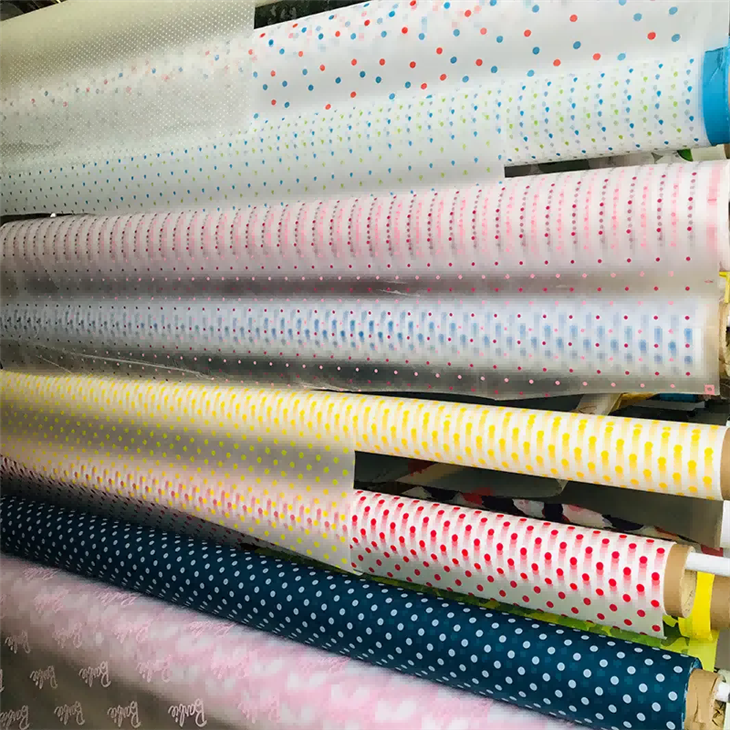

For example, if the specified thickness of the film is 0.2 mm, the measured thickness at different points should be close to this value, with a deviation of no more than ± 0.01 mm. Our manufacturing process is designed to ensure excellent thickness uniformity for our Top - grad - printing - pvc - film - in - roll, which is crucial for applications like printing, where consistent thickness is necessary for high - quality prints.
4. Tensile Strength and Elongation Testing
Tensile strength and elongation are important mechanical properties of PVC film. Tensile strength refers to the maximum stress that the film can withstand before breaking, while elongation measures the ability of the film to stretch before it breaks.
To test the tensile strength and elongation, you can use a tensile testing machine. Cut a sample of the film into a standard shape, usually a dumbbell shape, and place it in the testing machine. The machine will gradually apply a pulling force until the film breaks, and it will record the maximum force and the elongation at break.
High - quality high transparency PVC film should have sufficient tensile strength and elongation to withstand normal handling and usage. For example, in packaging applications, the film needs to be strong enough to hold the contents without tearing and flexible enough to conform to the shape of the package.
5. Chemical Resistance Testing
PVC film may come into contact with various chemicals in different applications. Therefore, it is important to test its chemical resistance. You can perform simple chemical resistance tests by exposing small samples of the film to different chemicals for a certain period.
Common chemicals to test include acids, alkalis, solvents, and oils. After the exposure, check the film for any signs of damage, such as discoloration, swelling, or loss of strength. A high - quality PVC film should be resistant to most common chemicals used in its intended applications.
For instance, if the film is used in the food packaging industry, it should be resistant to food - grade oils and acids. Our PVC Jacquard Film is designed to have good chemical resistance, ensuring its suitability for a wide range of applications.
6. Adhesion Testing
In some applications, the PVC film may need to adhere to other materials. For example, in laminating applications, the film needs to bond well with the substrate. To test the adhesion, you can use a peel test.
Cut a sample of the laminated film and use a peel tester to measure the force required to peel the film from the substrate. A good adhesion means that the film will not easily separate from the substrate during normal use.
7. Heat Resistance Testing
Heat resistance is another important property, especially for applications where the film may be exposed to high temperatures. You can test the heat resistance by placing a sample of the film in an oven at a specified temperature for a certain period.
After the heat treatment, check the film for any changes in its physical properties, such as shrinkage, deformation, or loss of transparency. High - quality PVC film should be able to maintain its properties within a certain temperature range.
Conclusion
Testing the quality of high transparency PVC film in roll is a comprehensive process that involves multiple aspects. By conducting these tests, we can ensure that our products meet the highest standards of quality and performance.
If you are interested in our High Transparency PVC Film in Roll or have any questions about our products, please feel free to contact us for procurement and further discussions. We are committed to providing you with the best - quality products and excellent service.
References
- ASTM International standards for plastic film testing.
- ISO standards related to PVC film quality assessment.
- Industry - specific guidelines for high - transparency PVC film applications.